Automotive · Van rental, Warsaw
A rental fleet with four contracts and one booking flow
Van and minibus rental in Warsaw. Short, medium and long-term hire plus a replacement vehicle after an accident — four different contracts, one catalogue, one enquiry form.
- Result
-
151
vehicles in one catalogue, four contract types, one enquiry - Vertical
- Automotive
- Stack
- WordPress, Custom theme, Purpose-built rental plugin, CF7 conditional fields, Local SEO
- Live site
- focusrent.pl
The problem
Vehicle rental looks like one business and is four. A courier taking a van for a day. A company putting a van on a twelve-month contract instead of buying one. A crew that needs a nine-seater for a season. And a driver whose own car is in the workshop after somebody else’s accident, with the insurer paying for the rental.
Four customers, four contracts, four sets of paperwork. Most rental sites flatten them into one “rent a van” page with a phone number, and three of the four leave to work it out somewhere else.
What I built
Four paths, from the first screen
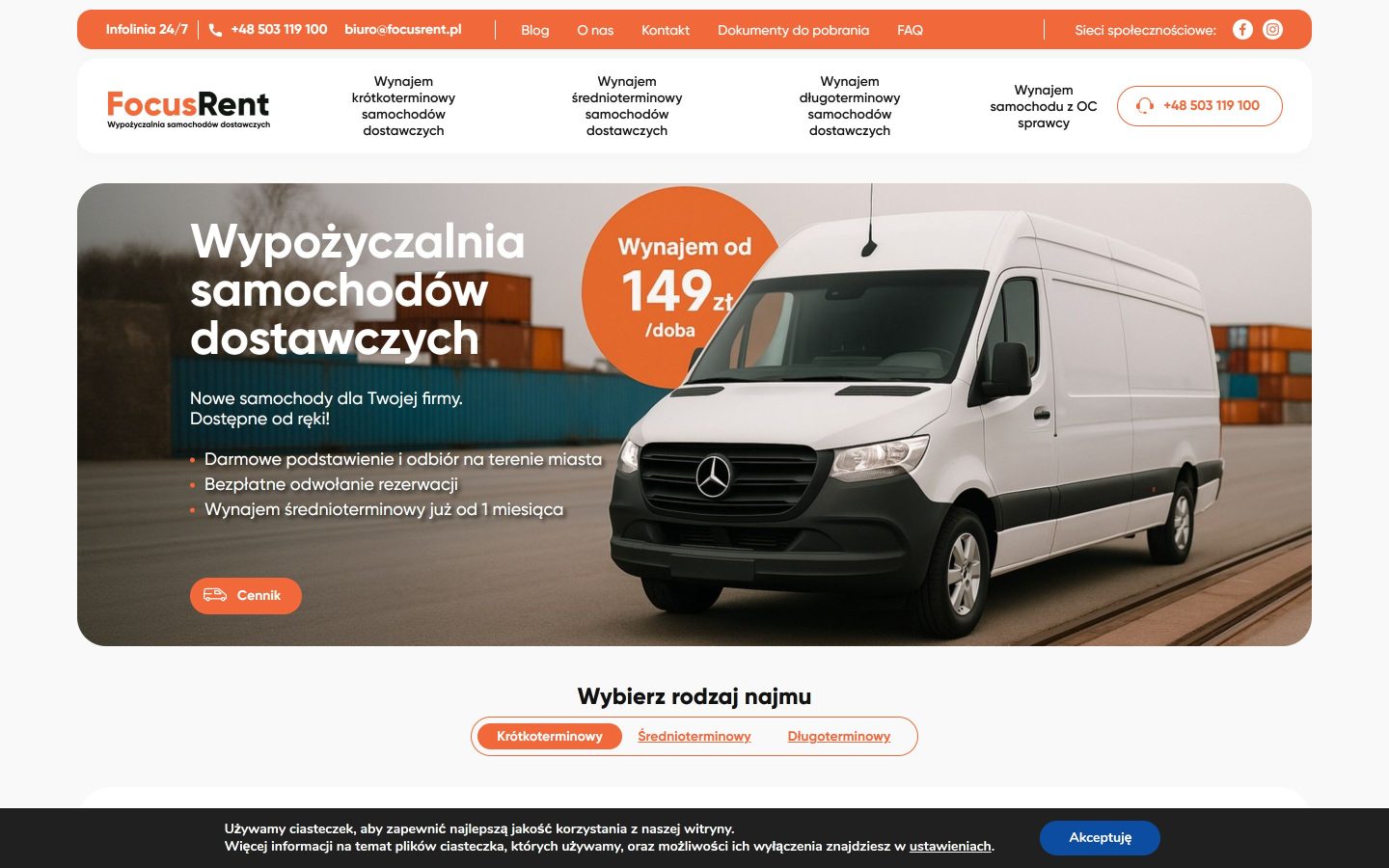
Short-term, medium-term, long-term and replacement-after-accident are each their own page and their own item in the main menu. Nobody has to work out which contract they need; they pick the line that describes their situation.
The whole fleet in one place
- 151 vehicles in one catalogue, filtered by type — from panel vans and minibuses to car transporters and refrigerated vans
- Every pick-up branch with its own address, phone number and opening hours
- 27 articles, most written for a specific Warsaw district — Mokotów, Bemowo, Ursynów, Praga-Południe, Bielany, Wola — so a search for a van in Mokotów finds the page about Mokotów
Long-term hire needed its own logic
A day-rate calendar cannot hold a twelve-month contract. The price is monthly, the contract has a term, the vehicle is assigned rather than booked, and the questions at enquiry are different from a weekend rental. Every ready-made booking plugin models a hotel room.
So the long-term route runs on a plugin written for this business, instead of a generic add-on bent into shape. When a ready-made tool does not fit the way a business actually sells, I build the missing part rather than pretend the tool fits.
One form that asks only what applies
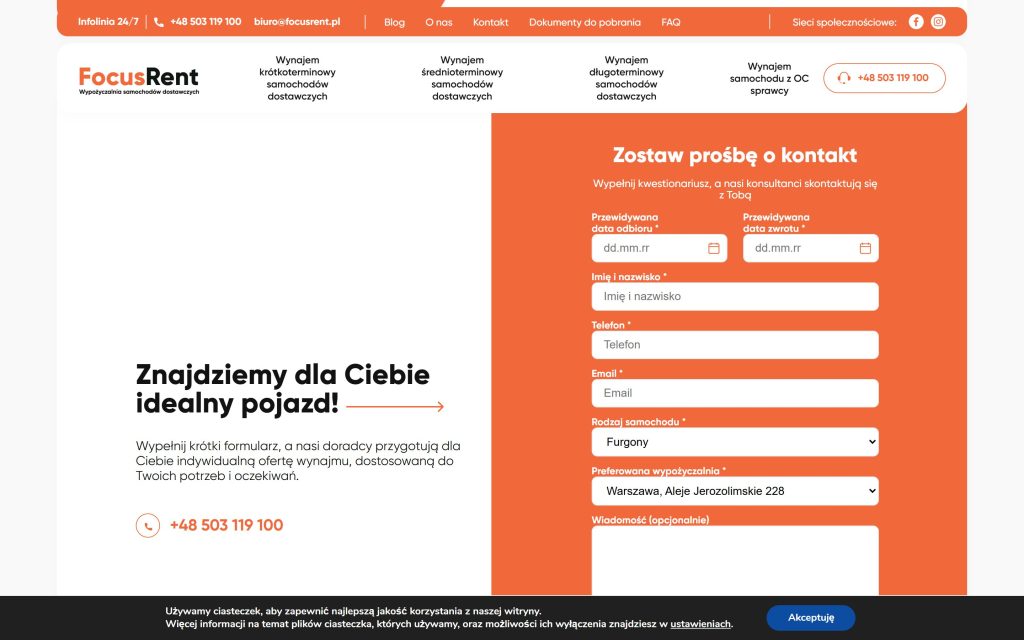
Pick-up date, return date, vehicle type, preferred branch — the four things that decide the quote — plus name, phone and email. The form changes with the rental type chosen, so it asks what applies to that contract and does not ask everyone everything. There is no availability calendar and no instant confirmation: the site collects the facts, and a consultant calls back with an offer. That first call starts with the dates and the vehicle already known, instead of ten minutes spent gathering them.
On mobile
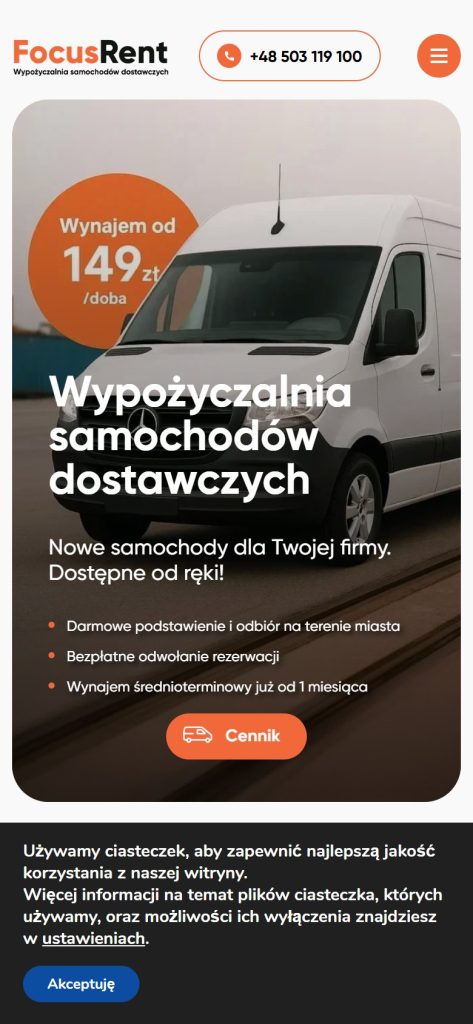
A rental business gets its work from someone standing next to a load that needs moving, holding a phone. On the mobile first screen: the phone number at the top, the “from 149 zł per day” badge, and the price list button — nothing to scroll past before the call. If the number is not tappable on the first screen, the site failed however it looks.
What the customer gets
Each of the four kinds of customer finds their contract from the first screen. The fleet is in one catalogue instead of behind a phone call. And the enquiry arrives with the dates, the vehicle and the branch already filled in.
The site itself